




Digital Food Safety Management System (FSMS)
Ditch the paper logs, scattered checklists, and binder chaos. Runwell helps restaurants, bars, hotels, cafés, and canteens manage food safety, HACCP routines, temperature monitoring, deviations, and documentation in one intuitive app.
Free trial. No credit card required.
What is a Digital Food Safety Management System?
A digital Food Safety Management System helps food businesses replace paper checklists, manual temperature logs, and scattered documentation with structured digital routines. It supports HACCP-based food safety work by making daily checks, cleaning tasks, deviations, temperature monitoring, and audit history easier to document, follow up, and access when needed.
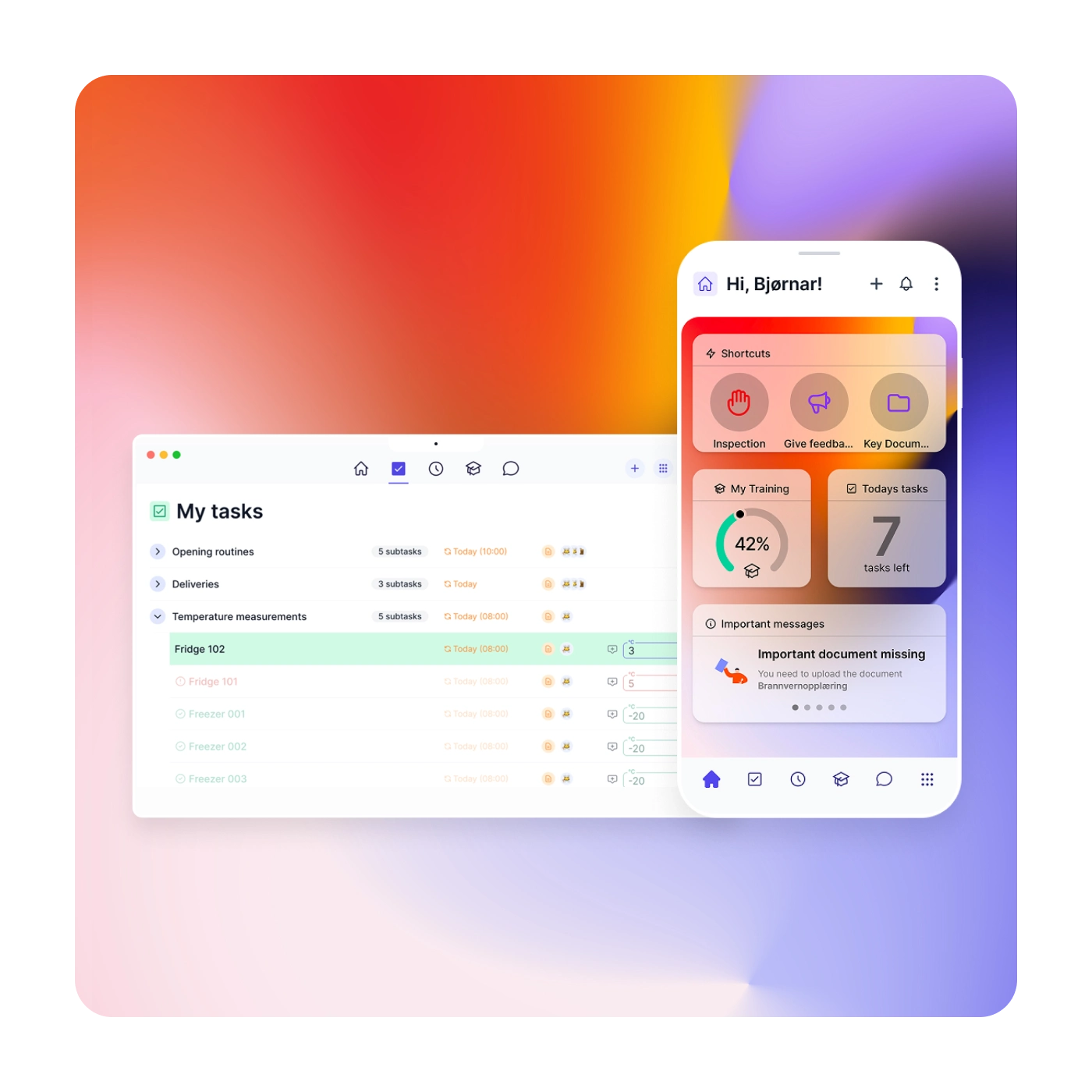
Everything you need, in one place
Compliance doesn’t have to be complicated. Get a super-simple, tailored food safety solution designed for your business.

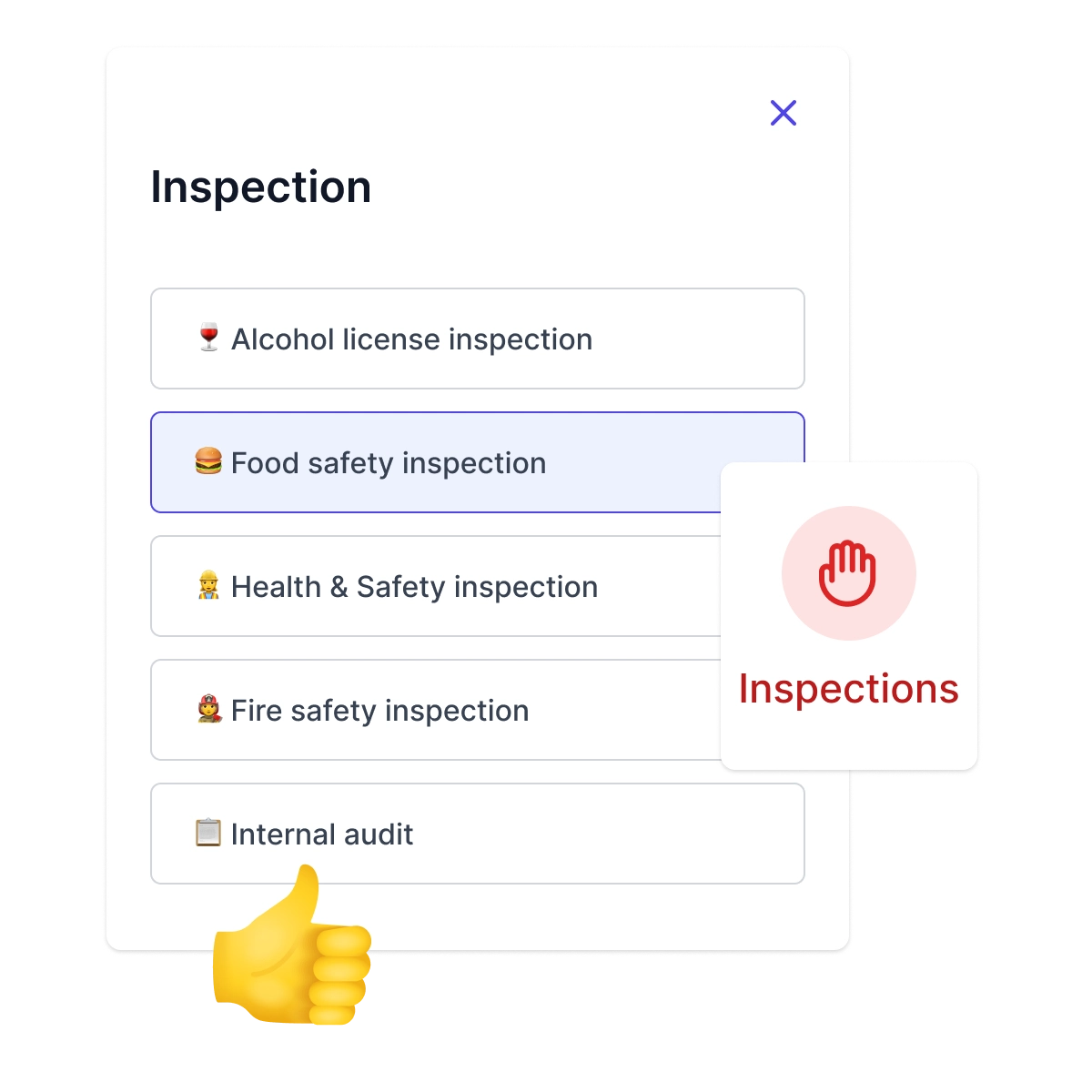
Inspection-ready guarantee
Inspection button
Automatic temperature monitoring

Food safety and HACCP made simple
Food safety is the goal. HACCP is the method that helps food businesses identify risks, control critical points, and document that routines are followed. In many kitchens, that quickly turns into paper logs, manual checks, and scattered documentation. Runwell turns HACCP-based routines into clear digital tasks for cleaning, temperature control, deviations, and follow-up, so your team knows what to do and managers can stay in control.

All-in-one
All your routines.
One app
Runwell brings together all you need for daily operations and compliance – food safety, HSE, communication, alcohol procedures, and more. One place. Always up to date.

A smarter way to communicate with your team
Keep your team connected with seamless, real-time communication.
Trusted by 500+ restaurants and hotels









%201.png)









Frequently Asked Questions
How is Runwell different from other food safety management systems and HACCP systems?
Runwell is a modern food safety and HACCP system built with usability at the core. It is designed to be easy for staff to use during busy shifts, and quick for managers to set up across one or multiple locations. Instead of complex workflows and heavy onboarding, Runwell helps teams get started fast with clear routines, digital checklists, temperature monitoring, deviations, and documentation in one intuitive app.
Can I manage multiple restaurant locations in Runwell?
Yes. Runwell is built for businesses with one or multiple locations. You can standardize routines, checklists, documentation, and follow-up across all restaurants, while still keeping a clear overview of what is happening at each location.
How does Runwell help with HACCP compliance?
Runwell helps digitize key HACCP-based routines such as checklists, temperature monitoring, cleaning tasks, deviations, documentation, and corrective actions. The system gives staff clear tasks and helps managers keep a digital record of what has been completed.
What should a food safety checklist cover?
A food safety checklist should cover the tasks that prevent problems in daily operations. In practice, that often means temperature checks, cleaning, cross-contamination controls, allergen handling, and stock rotation. The key is keeping it short, repeatable, and easy to document.
What is HSE food safety, and how does it relate to daily operations?
HSE food safety is about protecting both guests and staff by reducing risks in everyday work. It connects food safety with practical routines like hygiene, safe handling, cleaning, training, and incident follow-up. When HSE is built into daily habits, compliance becomes easier and more consistent.
How is HACCP connected to an FSMS?
HACCP is a method for identifying food safety risks and deciding how to control them. An FSMS is the overall system that turns that thinking into real routines, records, and follow-up. In other words, HACCP helps define what matters most, and the FSMS makes sure it’s done consistently.
What is an FSMS plan, and what should it include?
An FSMS plan is the written structure behind your food safety work. It typically covers your key risks, the controls you use, how you monitor them, what records you keep, and what you do when something goes wrong.
What does FSMS mean?
FSMS stands for Food Safety Management System. It is the routines, checks, and documentation you use to keep food safe in daily operations and show that you’re in control.