



Pro Tips
FSMS plan: how to build a food safety management system plan
Build an FSMS plan that works in real operations. See what to include, how to structure it, and how to keep it audit-ready.
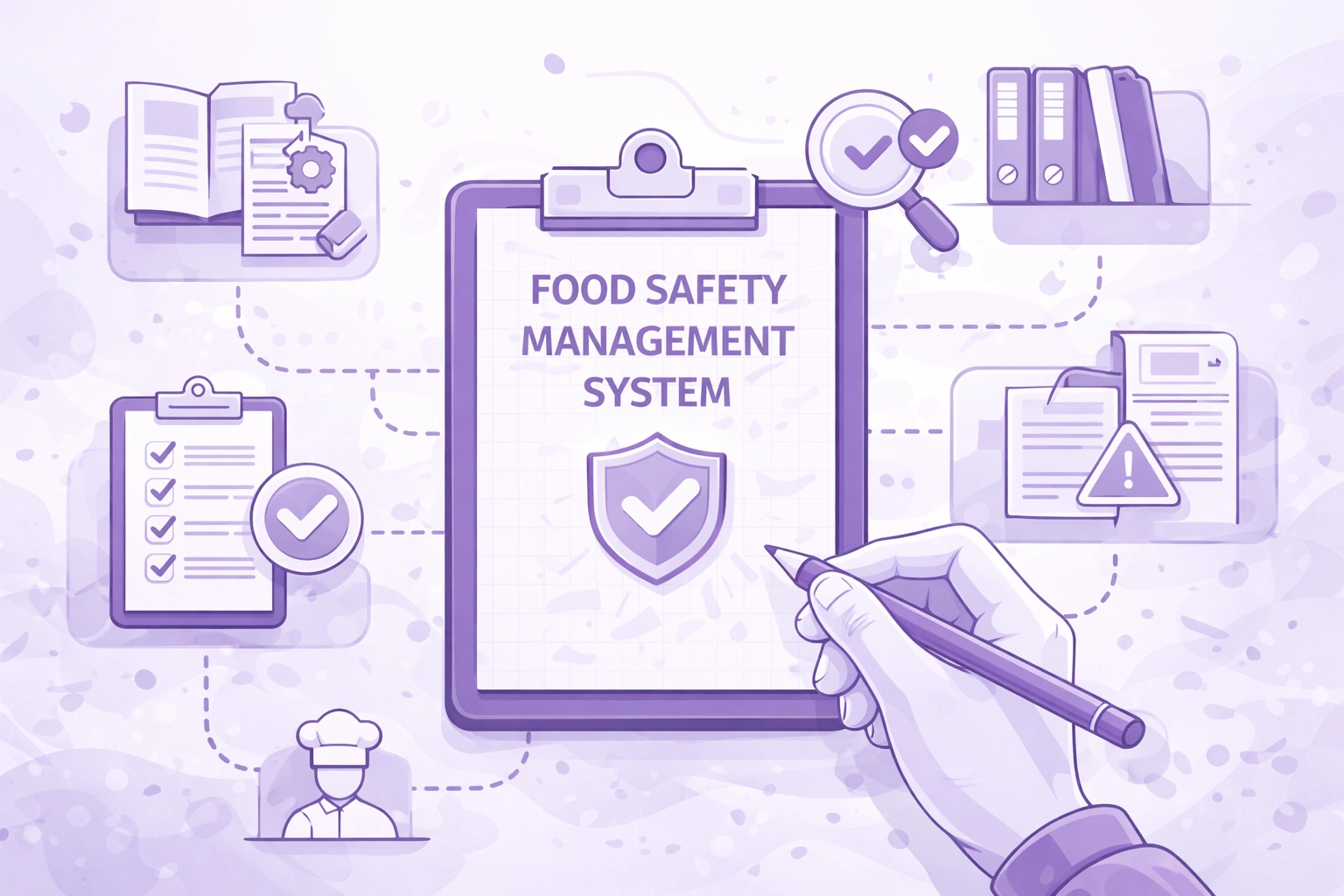
What is an FSMS plan?
An FSMS plan is a written plan that turns food safety requirements into day-to-day routines. It usually combines:
- Your hygiene and operational prerequisites (the basics you do every day), and
- Your HACCP-based controls for the risks that matter most.
HACCP is widely used as the structured method for hazard analysis and control points, and it’s often embedded inside an FSMS plan.
What should an FSMS plan include?
A good FSMS plan is not “more documentation”. It’s the minimum structure that makes food safety consistent in real operations, across shifts and staff changes.
At a practical level, most FSMS plans cover:
1) Scope and responsibilities
What your business does, what products you handle, and who is responsible for checks, follow-up, and reviews.
2) Process overview
A simple flow from receiving to serving. This makes it easier to spot where risks appear.
3) Prerequisite programs (PRPs)
The daily foundations such as cleaning, hand hygiene, temperature control, allergen handling, pest control, maintenance, and supplier routines.
4) HACCP-based controls
Where you identify hazards, decide what needs control, set limits, and define what you do if something goes wrong. Codex describes HACCP as a systematic tool for identifying hazards and controlling them through preventive measures.
5) Monitoring and records
What you record, how often, and where it’s stored, so you can show consistent control over time.
6) Corrective actions
What happens when limits are not met, including who decides, what’s fixed, and how you prevent repeat issues.
7) Verification and review
How you check that the system works (internal checks, trend review, calibration, audits) and how often you update the plan.
If you want a global “gold standard” structure to compare against, ISO 22000 is a dedicated food safety management system standard and can be a useful reference point when shaping your plan.
How to write an FSMS plan step by step
Step 1: Start with the real world, not the ideal world
List your top 5–10 “must-run” routines first (temperature checks, cleaning, allergens, receiving, storage). Keep it realistic for busy shifts.
Step 2: Map your flow in one page
Receiving → storage → prep → cooking → cooling/holding → serving/delivery. Add where cross-contamination and temperature risk typically happen.
Step 3: Define your PRPs clearly
Write routines so a new team member can follow them. Avoid long policy text. Use simple “what, when, who, where recorded”.
Step 4: Do a basic hazard check (HACCP thinking)
Identify what can go wrong at each step, and what prevents it. Codex HACCP guidance is a good baseline for the logic and terminology.
Step 5: Decide what you will monitor
Only monitor what you will actually act on. If it will not change a decision, it usually does not belong in daily checks.
Step 6: Write corrective actions that are usable
“Fix the issue” is not enough. Specify:
- What to do immediately
- What to record
- When to escalate
- How to prevent repeat issues
Step 7: Set a simple review rhythm
Example: weekly quick review (missed checks, recurring deviations), monthly deeper review (trends), quarterly plan updates.
FSMS plan vs HACCP plan: what’s the difference?
- HACCP plan focuses on hazard analysis and the controls that prevent food safety failures.
- FSMS plan is broader: it includes HACCP controls plus the everyday hygiene and operational routines, training, records, and review process.
Common reasons FSMS plans fail
Too complex to run
If the system creates friction, it will be skipped during peak hours.
No clear ownership
If “everyone” is responsible, no one is.
Records exist, but follow-up doesn’t
A missed temperature check is not the problem. The problem is when it happens repeatedly without action.
The plan is not updated
Menus, equipment, suppliers, and staff change. Your FSMS plan must follow the real operation.
A practical FSMS plan outline you can copy
Use this as your page order:
- Scope, products, responsibilities
- Process flow overview
- PRPs (cleaning, temps, allergens, pests, suppliers, maintenance)
- HACCP-based controls (hazards, limits, monitoring, corrective actions)
- Records and storage
- Training and onboarding
- Verification and review schedule
- Version history (when changed, why)
Summary
A strong FSMS plan is short, specific, and easy to follow. It prioritizes the routines that prevent real risk, makes responsibilities clear, and produces records you can trust over time.

Related articles

Stay up to date
Industry insights straight to your inbox
Practical insights and smart improvements to simplify hospitality operations. We'll also keep you updated on relevant news from Runwell.