

Pro Tips
Food Safety Checklist: Daily, Weekly, Monthly Tasks
A practical food safety checklist for food businesses, with daily, weekly, and monthly tasks that support FSMS and HACCP documentation.
In short
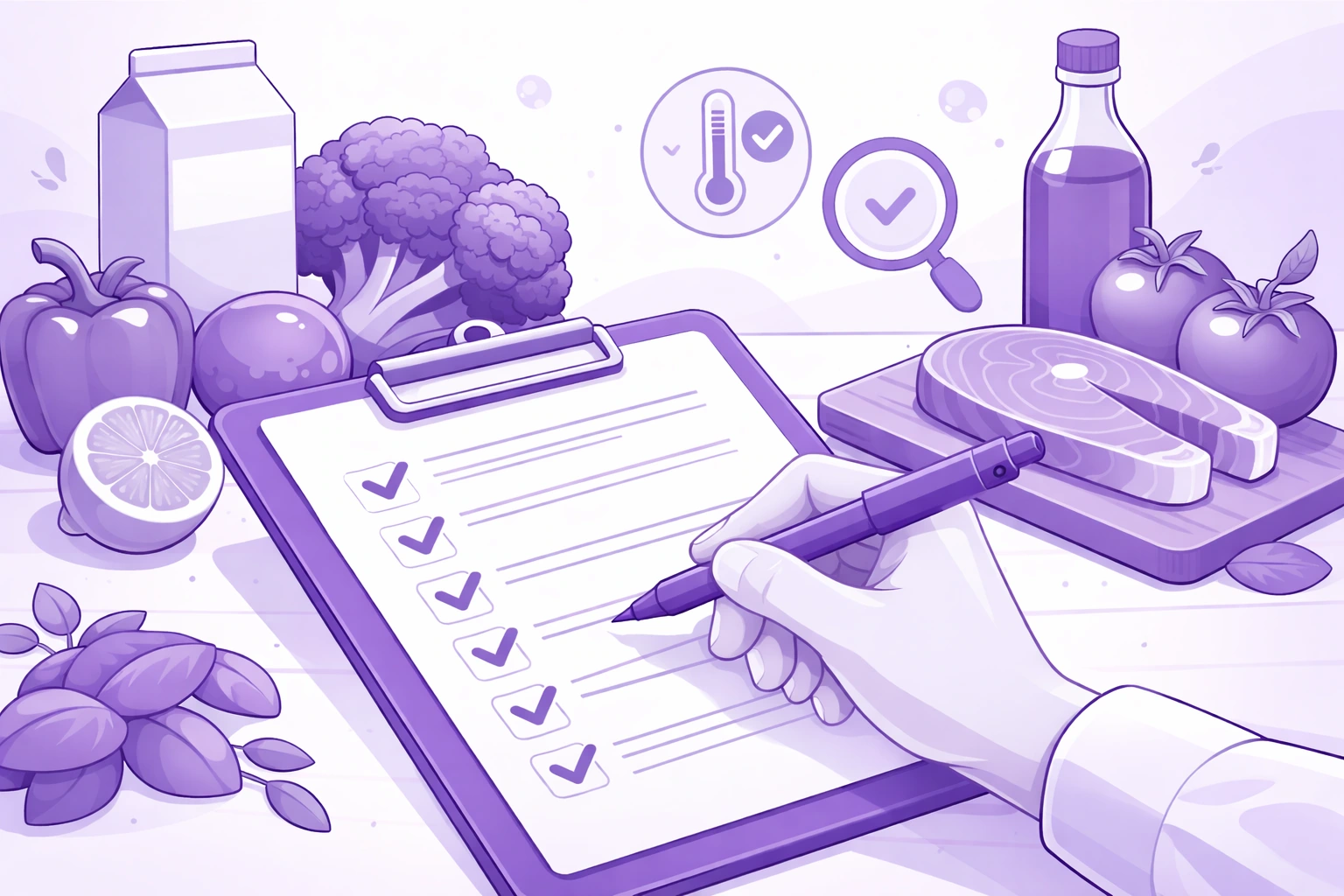
A food safety checklist helps businesses run food safety routines consistently every day.
Daily, weekly, and monthly checks support hygiene, temperature control, allergens, cleaning, and corrective actions.
Checklists are part of an FSMS and help document that routines are actually followed.
Simple logging, clear responsibilities, and regular reviews make checklists easier to maintain.
The goal is consistent food safety, better documentation, and smoother inspections.
Food Safety Checklist: a practical guide for food businesses
A food safety checklist is a simple way to make food safety routines consistent in real life. Instead of relying on memory, you have a repeatable set of controls that staff can follow, log, and improve over time. That is also what makes it useful for a Food Safety Management System (FSMS): it turns your food safety work into actions you can prove and repeat.
What is a food safety checklist?
A food safety checklist is a structured list of food safety tasks that you complete on a schedule, usually daily, weekly, and monthly. The checklist typically covers hygiene, cross-contamination control, temperature control, allergen handling, cleaning, and corrective actions. It helps you stay consistent, and it creates documentation that shows you have control in practice, not only on paper.
Many businesses build their checklist around general hygiene principles and HACCP thinking. HACCP is the method for identifying hazards and controlling them at key points, while the checklist is the routine that makes those controls actually happen in daily operations.
Food safety checklist vs FSMS and HACCP
A checklist is not the full FSMS. Your FSMS is the system that explains how you manage food safety: responsibilities, procedures, training, monitoring, corrective actions, verification, and record-keeping. The checklist is one of your tools inside that system.
Think of it like this:
- FSMS is your structure and documentation.
- HACCP is how you identify hazards and define controls.
- The checklist is how you run those controls consistently, day after day.
If you are building documentation from scratch, it often helps to create a simple FSMS plan first, then turn the plan into checklists and logs.
Daily food safety checklist
Daily checks focus on the controls that most often prevent food safety incidents: cleanliness, separation, temperature, allergens, and traceability. The exact checklist depends on your menu and workflow, but these are solid defaults for many operations.
Opening checks (before service):
- Confirm staff hygiene routines and handwashing setup are ready (soap, paper towels, sanitizer where relevant).
- Verify cleaning status of food-contact surfaces and key equipment used for prep.
- Check storage temperatures (fridges, freezers, hot holding where applicable) and log the results.
- Confirm allergen information is available and up to date, and that allergen separation practices are ready (separate tools, containers, labels).
- Check deliveries or receiving area readiness if you accept goods in the morning.
During service:
- Keep raw and ready-to-eat foods separated in prep and storage.
- Monitor hot and cold holding temperatures at defined times, and log them.
- Use clean utensils and change gloves appropriately (if used) during task changes.
- Handle allergen orders consistently (clean area, clean tools, correct labels, correct communication).
Closing checks (end of day):
- Complete cleaning tasks for food-contact surfaces, sinks, and high-touch areas.
- Store food safely, label items clearly, and manage date marking.
- Dispose of waste correctly, and leave storage areas clean and pest-resistant.
- Record any deviations and what you did to fix them (corrective actions).
Weekly food safety checklist
Weekly tasks help you catch gradual drift: equipment that runs a little warm, cleaning routines that miss certain areas, or stock rotation that slips when it is busy.
Weekly checks to consider:
- Deep clean priority zones (drains, under equipment, fridge seals, door handles, hard-to-reach prep areas).
- Review temperature logs for patterns and repeated issues.
- Verify allergen control routines (labels, storage separation, dedicated tools, staff habits).
- Confirm stock rotation practices (FIFO), date marking, and discard rules.
- Check that probe thermometers work and are clean, and verify calibration if relevant.
- Walk through pest prevention basics (doors, storage, waste areas, signs of activity).
Monthly food safety checklist
Monthly checks are for system health: training, verification, supplier confidence, and documentation quality.
Monthly checks to include:
- Refresh training or micro-training on the riskiest areas (temps, cross-contamination, allergens).
- Review corrective actions and confirm issues were closed properly, not only noted.
- Verify your procedures still match reality (menu changes, new equipment, seasonal workflow changes).
- Review supplier and receiving routines (traceability, packaging condition, temperature on arrival where relevant).
- Do a quick internal audit against your FSMS plan: what is missing, what is unclear, what is not being logged.
The five areas that make checklists actually work
A checklist only improves food safety if it is realistic and easy to follow. These five areas make the biggest difference:
1) Clear ownership
Every checklist needs a clear “who does what”. If ownership is vague, checks get skipped.
2) Simple logging
Logging should be fast. If recording takes longer than the task, people will avoid it or do it inconsistently.
3) Defined limits
For temperature checks and similar controls, define what “OK” means, and what action to take if it is not OK.
4) Corrective actions
A good checklist makes it normal to record “what we did about it”. That is what builds trust in your documentation over time.
5) Review and improvement
Schedule short reviews. If the same issue happens repeatedly, the checklist is telling you what needs to change.
How this supports inspections and documentation
Many inspection frameworks focus on whether hygiene and food safety are controlled in practice. A well-run checklist creates a pattern of routine control, and it makes it easier to show what you do, how often you do it, and how you handle problems when they occur. The goal is not perfect paperwork. The goal is repeatable food safety in daily operations, supported by evidence.
Quick FAQ
How detailed should a food safety checklist be?
Start simple. Cover the critical controls first (temperature, hygiene, separation, allergens, cleaning), then add detail once the routine is consistent.
Do I need different checklists for different sites?
Often yes. The core structure can be the same, but details should match menu, equipment, and workflow.
Is a checklist enough for HACCP?
No. HACCP is the method for identifying hazards and setting controls. The checklist is how you run and document those controls consistently.

Related articles

Stay up to date
Industry insights straight to your inbox
Practical insights and smart improvements to simplify hospitality operations. We'll also keep you updated on relevant news from Runwell.